

How Much Protein Do You Need per Meal? A Simple Calculation
"How much protein should I eat?" has a simpler answer than most people think. Here is the math, and the real numbers for every meal.
Written by: VitaMeals team · Updated: · 2 min read
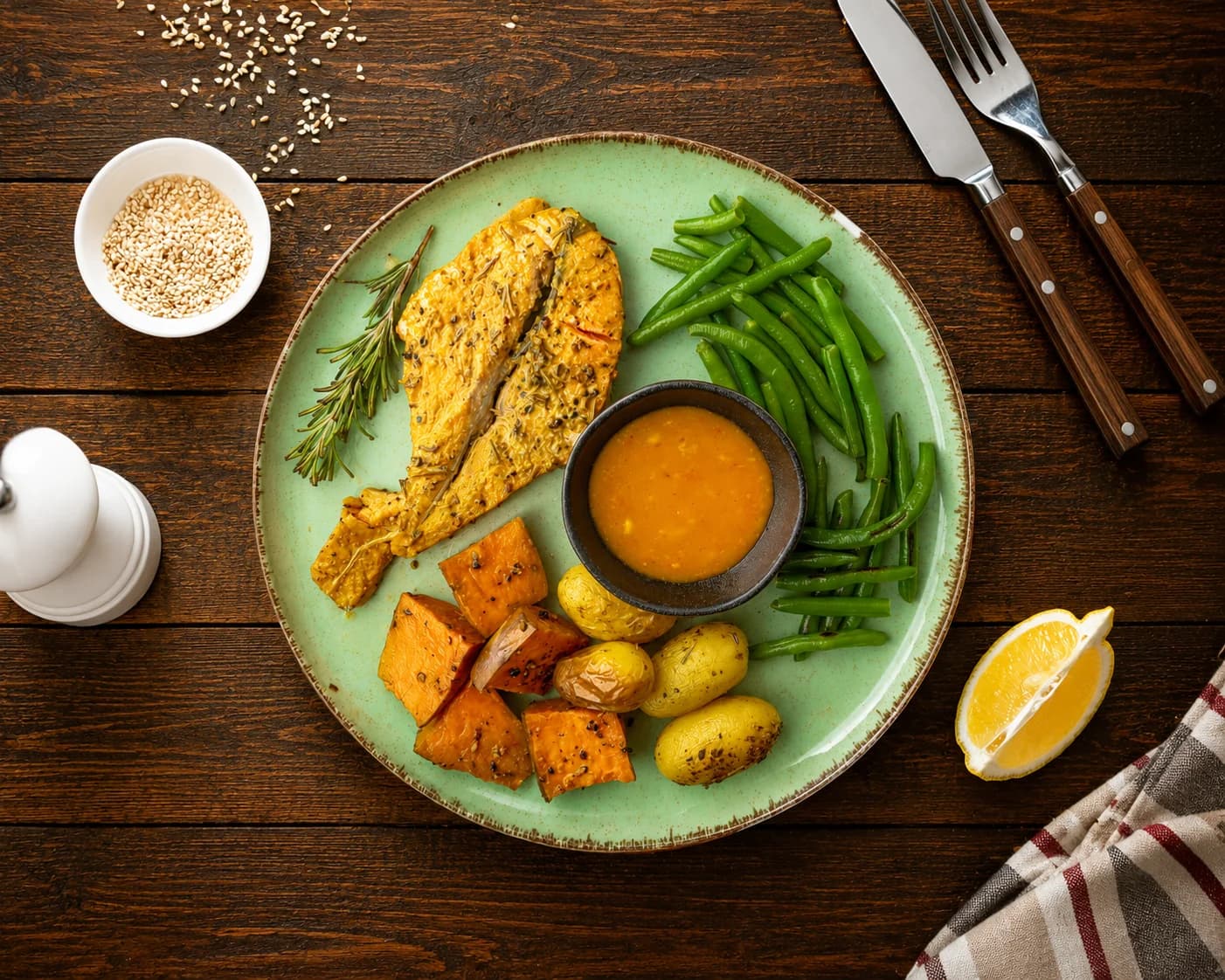
Protein has become the buzzword of every healthy-eating conversation, yet few people know how much they actually need. The good news: the math is simple, and you do not need an app or a kitchen scale.
The short answer
- The minimum for most adults: 0.8 g of protein per kilogram of body weight per day, according to the US National Academy of Medicine (as cited by Harvard's Nutrition Source).
- If you train regularly: the International Society of Sports Nutrition (ISSN) says 1.4–2.0 g per kilogram per day is sufficient for most exercising people.
- Per meal: the same society suggests about 0.25 g per kilogram, or 20–40 g per meal, spread every 3–4 hours.
Working it out yourself
Multiply your weight by the right number. For someone who weighs 70 kg:
- Minimum: 70 × 0.8 = 56 g a day.
- If training: 70 × 1.4 = 98 and 70 × 2.0 = 140, so 98–140 g a day.
- Over 3–4 meals, that is roughly 25–35 g per meal.
These are general numbers for healthy adults, not personal advice.
What does that look like on a plate?
On the VitaMeals menu, protein per meal ranges from 23 to 53 g, and 15 meals have 30 g or more. This table comes from the current menu, sorted by protein:
| Meal | Protein | Calories | Price |
|---|---|---|---|
| Salmon Fillet | 53 g | 514 | ₪57.9 |
| Kofta & Freekeh | 50 g | 580 | ₪44.9 |
| Spaghetti Bolognese | 50 g | 675 | ₪49.9 |
| Chicken Pesto | 47 g | 630 | ₪44.9 |
| Kofta & Rice | 46 g | 570 | ₪44.9 |
| Chicken Stir-fry |
In other words, one meal from the menu covers a full protein serving for most people, sometimes more.
Spreading it across the day
Most people eat little protein at breakfast and a lot at dinner. Spreading it more evenly across meals makes the target easier to reach without eating a huge portion at once. For example: eggs or cheese at breakfast, a meal from the menu at lunch, and a light dinner with some protein too. You do not have to be exact every day; what matters is being close to your target on most days.
Protein is not the whole story
- Calories: if your goal is weight loss, total calories matter more than protein alone. Every meal on the menu lists its calories.
- Carbs: if you train, carbohydrates fuel the workout; they are not the enemy.
- Vegetables: a meal with enough protein is complete with vegetables or a salad on the side.
When should you ask a professional?
If you have kidney disease, are pregnant or breastfeeding, or follow a diet prescribed by a doctor, the general numbers are not for you. Talk to a dietitian or doctor before changing how much protein you eat.
Want meals sorted by protein? See the high-protein meals, or every nutrition fact on the menu.
Want to try? The menu lists calories and protein for every meal.
See the menuSources
- Harvard T.H. Chan School of Public Health — Protein
- Jäger R. et al. (2017). ISSN Position Stand: protein and exercise. J Int Soc Sports Nutr 14:20
This is general information, not a substitute for advice from a dietitian or doctor.